Restoring Reverie

: The Art of Restoring & Sailing a Classic Wooden Sailboat


Leave a comment

Getting A Handle On Things

This spring, icy rain and violent winds kept me inside for many a day, here along the shore of Lake Michigan; rain, cold, sporadic clearing, repeat.    What’s important is the sporadic clearing.  There were some decent days, here and there. In those fleeting times, I jumped at the opportunity to get out for a good day of work on Reverie.  After a winter of ferocious gales it became a “beggars can’t be choosers” situation. I found myself going out in weather that was less than ideal but, conversely, less than tempestuous.

It’s like being out on an extended cruise; you realize you’ll never get anywhere if you wait for ideal conditions and, sooner or later, find yourself sailing in weather you never would have imagined. This cool, wet weather was great for tulips, though, and we’ve been enjoying a wonderful display of colors provided by the city of Holland making the Tulip Time Festival a spectacular one.

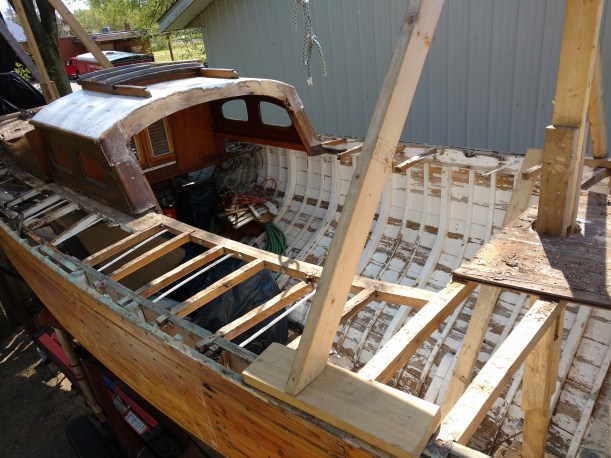
The time I managed to get some boat work in was quality time.  I was a relentless force of deconstruction.  The multi tool and sawzall got put through their paces and the deck is now completely removed with half the cabin top removed, as well. The hands on work aboard Reverie has taken a leap forward but new challenges revealed themselves during the dismantling. That, dear reader, is for the next blog entry.  This entry is about getting a handle on things and that we did.
IMG_20170515_154638578

One of this past winter/spring projects was to get all the tools tuned up and ready for use. Over the years, more than  a few tools have arrived at “Roger’s Home For Wayward Tools” that were missing their handles or lacking in some other respect. They needed a little help to get them in working order.

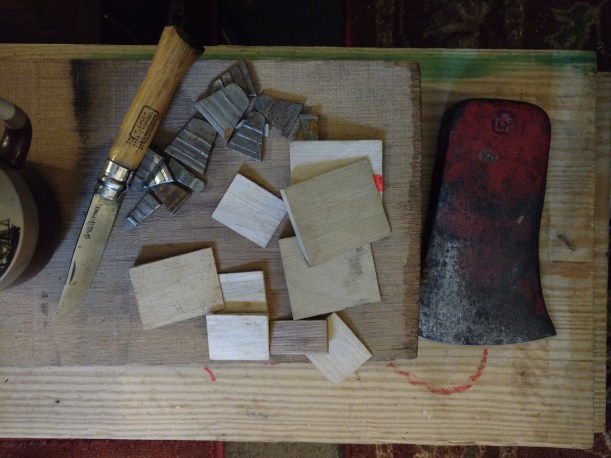
There was that 1-1/2 lb. ball-peen hammer we would need for riveting the frames.  There was that handsome Dayton pattern ax that had had its head secured with several large, hex head machine screws hammered over like clench nails; its handle also needed stripping and sanding (with the added benefit of erasing the name of the former owner proudly scrawled in bold, black marker).  There was also a hewing ax that was missing its handle but would soon be put to service.  It was time to get a handle on things.
IMG_20170318_101322238

Picking out the right wedge for the Council Tools Dayton pattern ax that needed its handle reset.

IMG_20170425_094457493

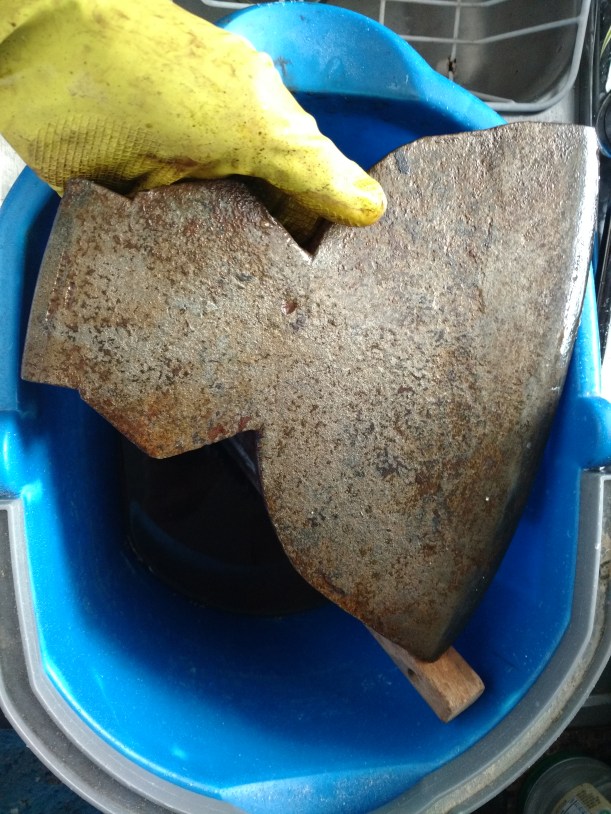
A fine old hewing ax head getting a soak in vinegar and salt to remove the century of rust that hid its true personality.
IMG_20170427_080506247

A finishing soak in baking soda and water to neutralize the acid and salt bath.  The blade still had a very sharp edge for being knocked about so many years.  Hand hammered forge marks and the folded cutting edge are apparent. “And what, pray tell, do you need a hewing ax for?”, you ask.  More on why we need a hewing ax in the next post.  Stay tuned.


Almost all of my chisels were in need of having their handles reset and some quality time on the Japanese waterstones.  Many of the blades needed to be hollow ground and lapped.  Hollow grinding is where you take the beveled side of the blade and run it over a grindstone to remove the middle of the bevel. This means less of the blade touches the honing surface.  Lapping is the process of making the flat side of the chisel completely flat.  This may not seem important but, avoid this process at your own peril; it’s an absolute necessity.

Most notable among the arsenal of chisels was the 2 inch wide timber slick.  A slick is a large chisel used where a substantial amount of wood needs to be worked such as in timber framing or working on the backbone of a wooden boat. For years, I used it occasionally but now am finding it necessary to use for some serious work ahead.  It had a broken old handle that I had reshaped and used awkwardly so I never really got to use it to its true potential.  Getting a handle on this beast is going to make less work in the long run and justify all the work I put into shaping a new handle.
IMG_20170320_153654919

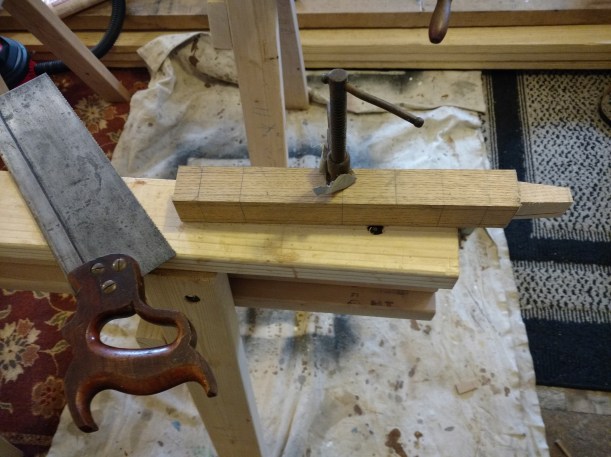
Here’s the white oak blank for the chisel handle with the tang fitting cut out using a fine-tooth Disston backsaw. The backsaw was sold by the T.B. Rayl Co. which sold tools in downtown Detroit.
IMG_20170321_095236192

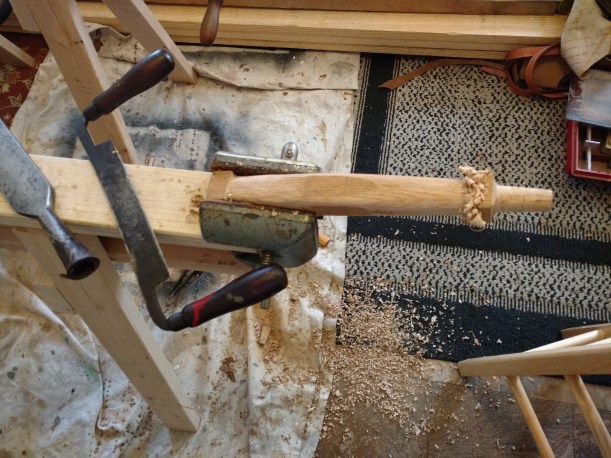
The handle taking shape thanks to the razor sharp draw knife made by the Ohio Tool Co.  It’s one of my favorite tools.  I’ve left the splatter of red paint on the handle to remind me of the trip to the emergency room that would be required if it were grabbed by the blade.  .
IMG_20170322_102503664 (2)

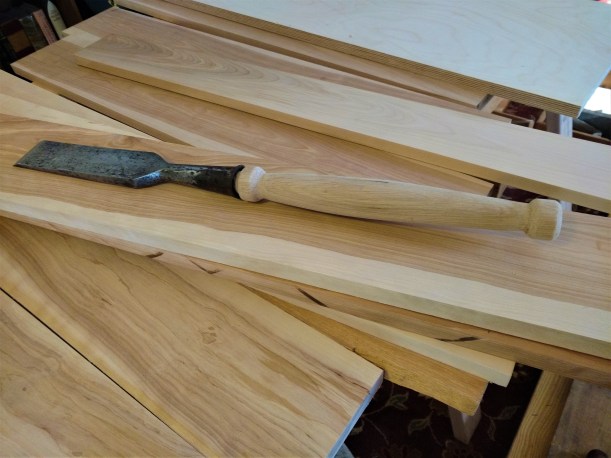
The handle getting its first fitting on the slick.  Pencil lines on the handle are preserved to keep things uniform right until it’s finished. Being able to use this tool two-handed is imperative.  The worldly slick, with its handle, is 23-1/2 inches long.

It feels good to get some of these old tools back in working order and on to a life of continued use.  Quite often, preparation is the most time consuming aspect of any job.  Having all your ducks in a row may seem tedious and even unnecessary when they seem to hardly relate to the task at hand but prepare, we must.

Having usable axes and hammers with sturdy handles along with sharp chisels that cut fine, paper thin slices of wood is truly worth the effort because they save time and are safer to use than tools that are just “good enough”.  Sometimes, only the best will do.  I’m happy to have this out of the way and on to more boat work.  There’s no need to shake one’s fist at the weather when it’s not agreeable.  There’s always something to do.


2 Comments

Port-side Carline

DSCN0259

Old Man Winter is really giving it to us this week with daytime temps in the single digits and nighttime temps below zero. On our back road morning commute, the other day, the thermometer read -20 F.  We have now been monitoring that area of our commute and have been finding there’s this little stretch of micro climate where the temperature is usually a few degrees cooler than elsewhere.  Hmm…

I’m committed to splitting up a giant red oak for firewood tomorrow but we’ll have to see if the machine will start in this kind of weather.   The forecast calls for -17 F night tonight so, dreaming of boats is a good way to pass the time.  As cold and snowy as it is outside, I still have some off-site projects to accomplish.

One of the off-site projects I am pleased to have gotten done is cutting out the port-side cabin carline to replace the damaged rotting one.


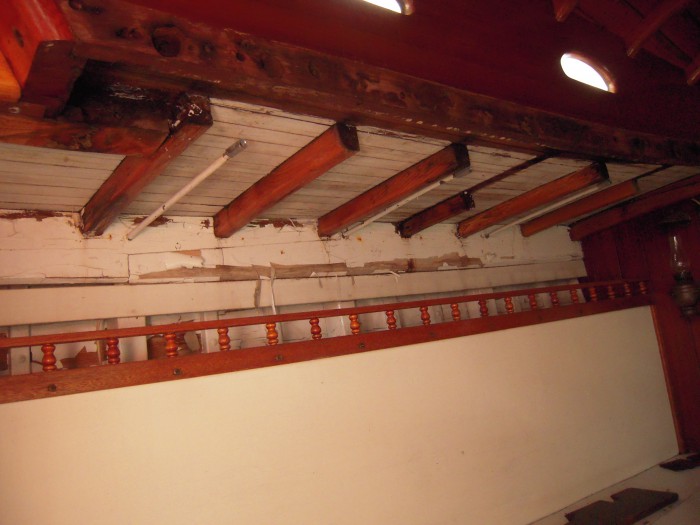
Port-side carline removed with rotting deck beams

On wooden boats, carlines are fore and aft deck supports that frame openings, such as hatches and the coach roof of the cabin, that run parallel to the keel.  This carline had already been removed when we got the boat. Luckily, it was intact so I had a nice template for the new one to replace it.  White Oak is the wood used for the deck beams and carlines of Reverie.    A band saw would have been very handy to cut out this piece as the carline is about 5-1/2 feet long.  That means 11 feet of sawing through 1-1/2 inch white oak.   Not having a band saw at my immediate disposal didn’t deter me from getting this done.


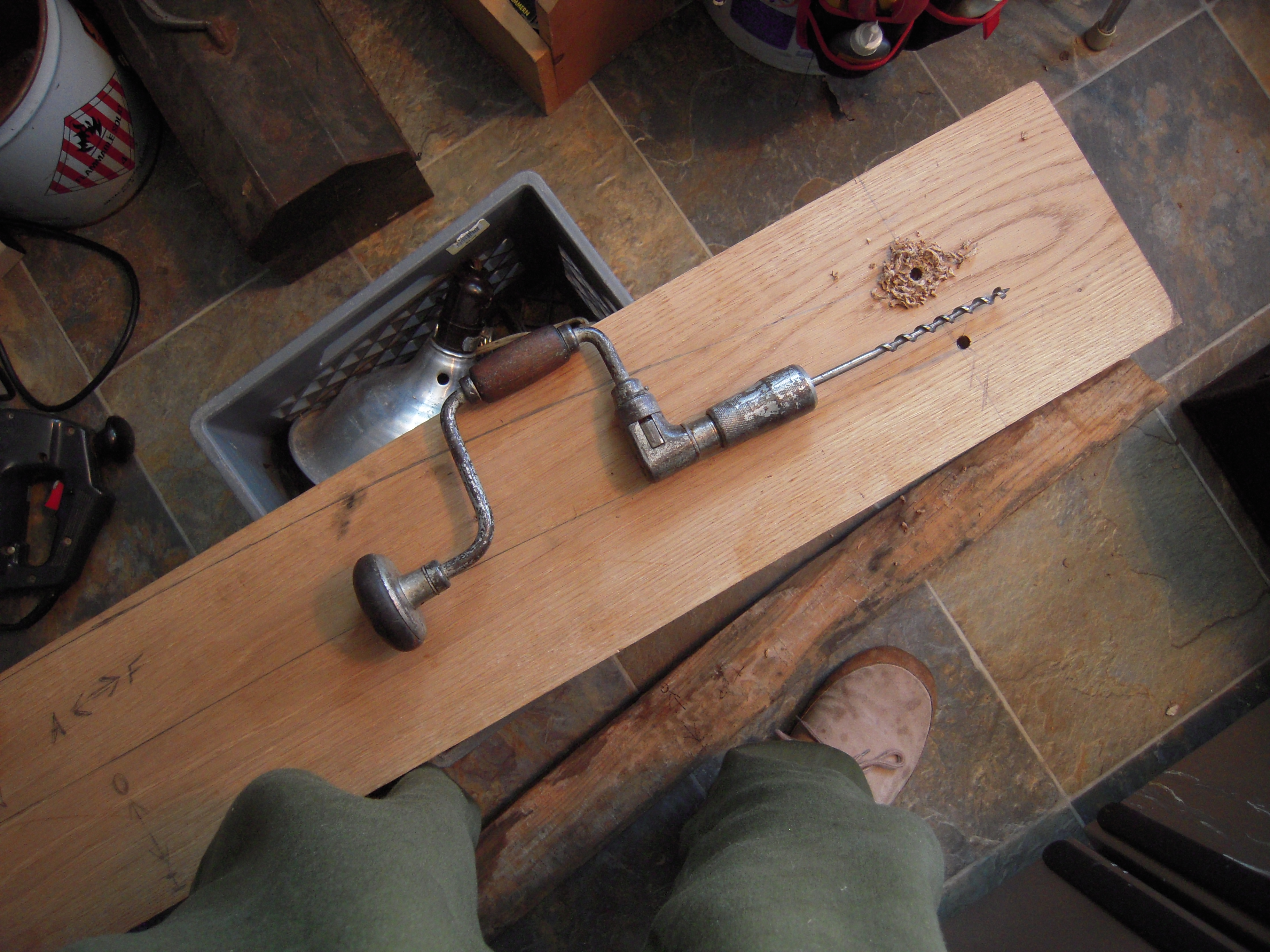
Pilot holes for the cut.

Pilot holes for the cut.


I first tried using a saber saw thinking it would be a good tool to keep the blade perpendicular to the mark and, ultimately, less work shaping the carline to its final dimensions. I made it less than a foot before the saber saw blade yielded to the mighty white oak and snapped.  Had I been successful with that laborious method, it would have taken me forever to cut that eleven feet.

It was time for bigger guns and a bit more concentration.  I chose to go at it again with a Sawzall and the largest blade aptly named ‘The Ax’ .  This is a big blade made for demolition work and capable of cutting through not only wood but stray nails and the like; perfect for hard white oak.  That said, I started with a fresh blade and noticed it wasn’t cutting as well by the time I finished.


Sawzall with 'Axe' blade

Sawzall with ‘Ax’ blade

Concentration was key at this phase.  I wanted to keep the cut 1/8″ from the template lines so as not to spend an inordinate amount of time shaping the piece later.  It wasn’t fast but the cut went well and I was glad to have gotten that close when I finished shaping the outer curve of the carline with a draw knife and hand planes.


DSCN0488

Stanley Rabbet Plane set to bullnose position.

DSCN0489

Draw knife used bevel side up for convex cuts and bevel side down for concave cuts.

The draw knife was used to bring the piece evenly close to the final mark.  The rabbet plane set in the bull nose position worked admirably for the concave planing as did the wooden jack plane for the convex planing.  As I worked, I checked for square often. It varied by no more than a 32nd” off square. I marked those areas with a pencil so as not to plane the rest of the edge out of square.

Keeping the Sawzall visually perpendicular to the piece takes a bit of practice and I would recommend cutting 1/4″ or slightly more away from the template mark if you’re not confident in your sighting ability.  It might take a bit more time in the final shaping but it’s better than ruining a big, expensive chunk of oak.

DSCN0487

16″ Wooden Jack Plane

The wooden jack plane is one of my favorite tools.  I stuck the removable handle back on it for the photo but I use it without.  I find I have a lot more control with both hands cupping the body.   It has somehow survived these 100 plus years and gives me great joy when I use it.  It looks crude and simple compared to more modern steel body planes but its razor sharp, heavy blade doesn’t chatter and provides lovely curls of fragrant wood as it glides its way through a project.  It literally sings with sonorous notes that tell you it is perfectly adjusted.  I made our Arts and Crafts inspired oak and walnut bed relying heavily on this plane and I can still hear the notes as I planed away. It planes so smoothly, I’ve never bothered to sand or take a cabinet scraper to the bed. The old jack plane comes alive and the resonance in the wood is sheer delight to experience. It did sing a couple of times when I was working on the carline but it was quick work and I never really got it going.   It is a privilege to own and I hope it provides some other lucky woodworker(s) the joy is has for me when I am dead and gone.

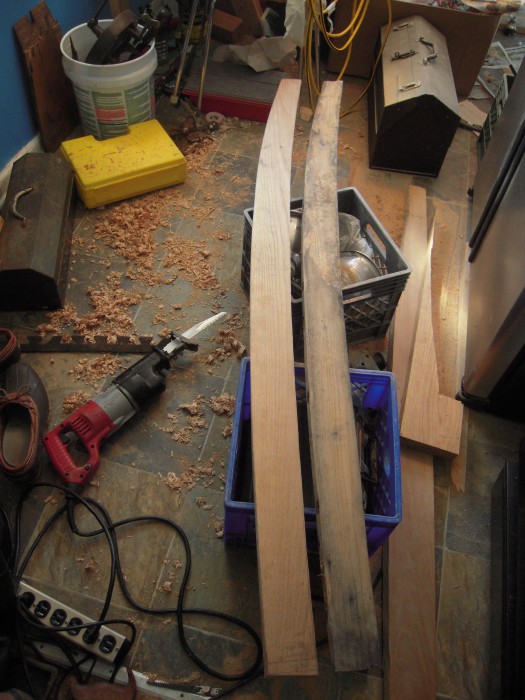
Out with the old, in with the new.

Out with the old, in with the new.


Once the piece was square and within 1/16 ” to the template mark, I stopped and will do the last few passes when I’m back at the boat. When you shape a piece of wood like this, you are releasing it from its former state and it now has a definite purpose.  The carline was always there, latent in that slab of oak.  I feel that I did nothing more than free it to a higher purpose.  After all, it could very well have been cut into 16″ sections and split up into firewood to warm some chilly soul on this frigid Winter day.

Stay warm, my friends.

~Roger