Restoring Reverie

: The Art of Restoring & Sailing a Classic Wooden Sailboat


Leave a comment

‘Tis The Season For Boat Work

Winter is here!  That means different things to different people.  For us, here at Camp Reverie,  it’s a busy time accentuated by the lengthening of each day. Today, we have sunset 9 minutes later than on the Dec. 21 solstice.   That means we’re packing up just a little bit later every day and getting more done with each passing week.

Winter has always been the time for boat work.  It was a time to take care of some of the large projects while the boat is out of the water and sailing is not a distraction. Endless projects  pile up during the warmer months that need to be addressed in the off-season. Projects, projects, projects; we sailors love our projects.

One of the reasons I look forward to winter is the fact that I can get outside and perform some of the heavy labor without heat and humidity getting in the way.  In the winter, you can always take off a layer if you’re too hot.  I haven’t been cold once this season. Keep it moving.

Thankfully,  we were able to take care of everything that needed to get done before the snow flew and have a formidable list to knock out before spring. Getting under the weather wire on the topsides project felt like a real victory as it left a clearer path to getting some other projects finished by spring.  There’s no hibernation going on here at Camp Reverie.  Well, maybe a little.

We can now get back to the removal of the deck and deck framing along with new sheer clamps and shelf, for good measure. Instead of hiding out from 90° F and 90% humidity, it’s lake effect rain showers,  lake effect snow showers and blistering cold winter gales.  I have had to shovel out a work area multiple times already and expect it to happen repeatedly over the winter.   Holland is in the Lake Michigan snow belt so we are no strangers to a stray flake or two.

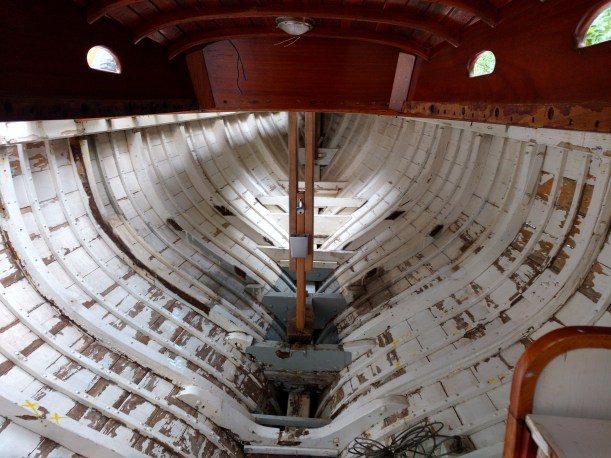
One of this winter’s first projects was to measure out the  deck framing and sheer clamps to get a materials requirement for the new deck framing, sheer clamps and shelf.  I did that on a day when the wind was gusting up to 60 mph which shook and rattled poor Reverie.  It felt a bit surreal as I measured in the darkness with the aid of a shop light illuminating a small ring wherever I moved it.  With her interior removed, Reverie picks up vibrations from without and sounds sympathetic tones much like a stringed instrument.  On a good day, it’s pleasant and interesting.  In a gale, it’s a bit unsettling.

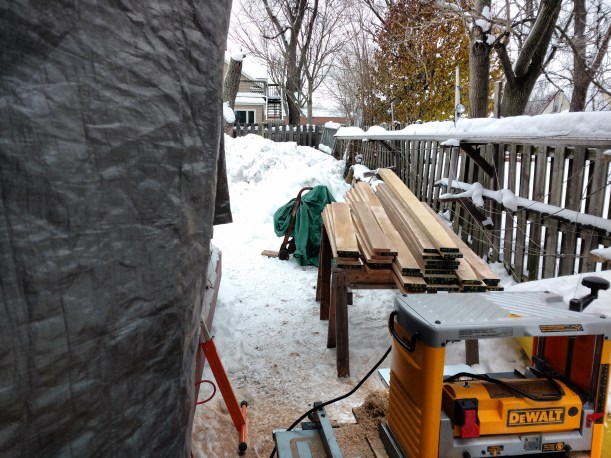
When the weather allows, I’ve been outside running rough lumber through the planer.  Last year, I picked up a nice 2″x 8″ x 12′ piece of white oak from Armstrong Millworks in Highland, Michigan. In late November, I paid a visit to L.L Johnson Lumber, in Charlotte, Michigan, where I picked out some nice 5/4″ x 12″ x 14′ southern yellow pine and some nice yellow birch for a furniture project.  The yellow pine will be used to replace the bad planks and , possibly, for the sheer clamps. Add to the mix about 100 board feet of rough red oak that was just sitting around and you have some work on your hands.
img_20161213_124548260-1

There was 100 board feet of red oak and 50 board feet of  yellow birch on top of the boat wood.  No sense just moving it.  Let’s make it useful.


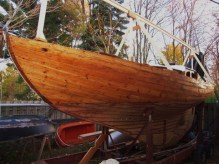
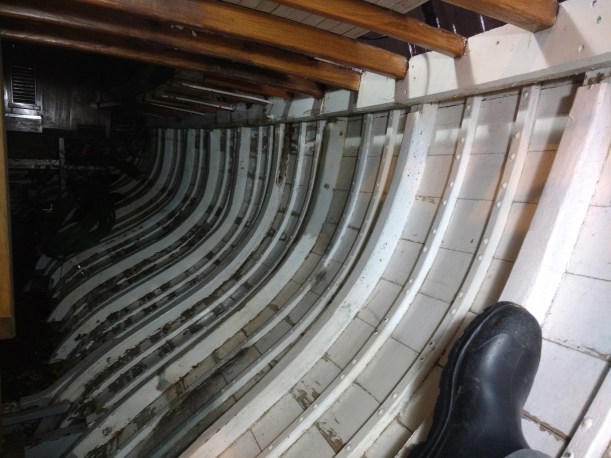
As soon as all the wood is processed, we can resume deck removal.  When I was on board measuring deck beams, I had a chance to look over the construction of the deck  framing and do not think the original builder of the hull and the builder of the deck/ interior are the same.  The hull is sturdy and overbuilt.  I am impressed by how well it has held together. The heavy frames with intermittent steam-bent frames is reminiscent of old work boat construction.
IMG_20161226_142855564.jpg

Sturdy hull with lightly built deck framing and sheer clamp.  Part of the mystery.

Conversely, the interior and deck-beam construction leave something to be desired, in the way of craftsmanship.  The deck framing and interior won’t be copied from what was found.  Both the deck and the interior will be rebuilt as sturdily as the hull.  Instead of ash for the deck beams, there will be white oak.  The sheer clamp will either be of white oak or yellow pine with a shelf added to the sheer. More on that once the deck framing commences.

Winter shall proceed as such:  it’s outside whenever possible and lots to do inside when being inside’s a good thing.  Our front bathroom has become the varnish booth.  The fan works great for exhaust and we haven’t had any issues with fumes while I varnish up Reverie’s wooden blocks.

Stripping down the blocks and soaking them in hot oil was one of the first projects we did when we got the boat. The oil had over a year to dry so I gave them a sanding and have been dipping them in a can of spar varnish diluted with about 30% turpentine.  As I write, they have 5 coats on them.  They will get their sixth and final coat tomorrow and reassembled shortly after that.  All said and done, there will be close to 40 hours devoted to the block restoration project alone.

“O God! methinks it were a happy life,
To be no better than a homely swain;
To sit upon a hill, as I do now,
To carve out dials quaintly, point by point,
Thereby to see the minutes how they run,
How many make the hour full complete;
How many hours bring about the day;
How many days will finish up the year;
How many years a mortal man may live.”
~William Shakespeare – King Henry Vl

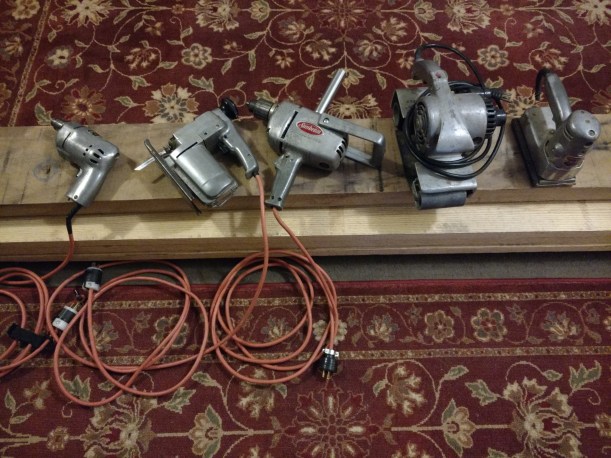
Along with the varnishing, there is always a bit more organizing and sorting of everything from boat hardware, to tools, to wood, to lp records, to books and to all the other things that get piled around and in the way.  We are removing the clutter and making a streamlined restoration machine.  I will leave you with a shot of some fine, vintage power tools that got new cords and cleaning as part of the indoor winter work.

Happy 2017 from Julia and Roger!  Thanks for following our project.
IMG_20170102_162714944.jpg

Tools that are as old as Reverie!  Quality never goes out of style.
Save


2 Comments

What’s Done Is Done

“To come to the end of a time of anxiety and fear!  To feel the cloud that hung over us lift and disperse- the cloud that dulled the heart and made happiness no more than a memory!  This at least is one joy that must have been known by almost every living creature.”

-Richard Adams, Watership Down


Last night, a task was put to rest that has plagued the restoration project for some time.  Last night, as twilight fell, I wrestled the 20 x 30 ft tarp over it’s frame and  drove away knowing I was done stripping, sanding and oiling the entire topsides of the good ship, Reverie.  A November Gale was kicking into high gear on the entire Upper Great Lakes with our Lake Michigan seeing 50 mph gusts before midnight.  It had begun to spit and gust earlier in the day but I had to finish leveling and blocking the trailer before another Winter set in.  With Reverie buttoned up for the storm, level and covered, I felt like I finally had some good news to share.

The stripping, sanding and oiling of the topsides is now complete.  I started the port-side last year and finished about this time last November, thinking I would be able to get the starboard-side done in the Spring and move along.  I jumped into it last April with renewed enthusiasm and resolve to finish this most unpleasant task.  What was it about this task, this minor detail (on paper), that made me want to do anything and everything but what needed to be done?

There was, first and foremost, the mess.  Everything about the job involved a mess.  Large piles of scraped paint and toxic sawdust required constant vigilance and tidiness. In April I got about six feet working on the starboard side from the bow back.  Last Summer, we were in the grips of one of the most humid summers I can remember.  Wearing coveralls, gloves, hat, goggles and respirator was like some form of Medieval  torture .  Eventually, I  succumbed to heat exhaustion and decided to put the project on hold.

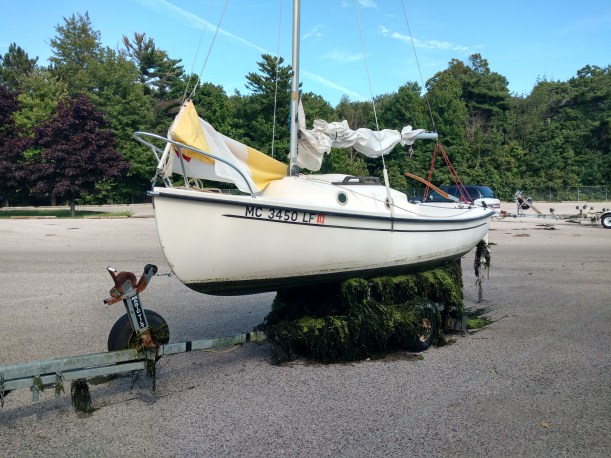
While the planning went on, the actual work on Reverie came to a quiet halt, for the summer.  Instead, we got out on the water and had some sailing days aboard our little Com-Pac 16, Prudence; 85° F with 85-90% humidity is bearable when you are 10 miles offshore.  We sailed and sailed until the weeds clogged our boat launch to the point of us almost getting stuck in invasive Eurasian Watermilfoil.  Keels and milfoil don’t mix.

Click to access Eurasian_Watermilfoil_521353_7.pdf

img_20160818_154420832

Just one of the brilliant days on Lake Michigan

img_20160826_163420703_hdr

Invasive plants at Port Sheldon

By the time the weed situation shut down our sailing, we made time to get a thing or two done aboard Reverie.  Julia started removing the rest of the interior cabinetry while I did various odd jobs that needed to be done sooner than later.  She eventually removed enough of the galley to expose the engine which made it easier to get it ready for removal.

I ended up getting the last of the interior out with a hammer and pry bar, preserving only what would go back on board.  A lot of the wood had experienced some effect of leaking rainwater and had to be taken out of the equation.  We put everything into storage to be used as templates, if needed. The interior is so much easier to assess with all of the cabinetry removed.

img_20161021_161047130_hdr

Reverie. happy to have all the rotting wood removed

By the time all this work was done, the weather had cooled down enough for me to buck up and get back to the scraping.  On a relatively large project, such as this,  it is a good idea to stick to tasks as distractions lurk at every turn.  Look, a bird!  Checking something off the list allows the mind to be released from further thought on the subject and proceed toward the end.  There’s a lot of that to come.

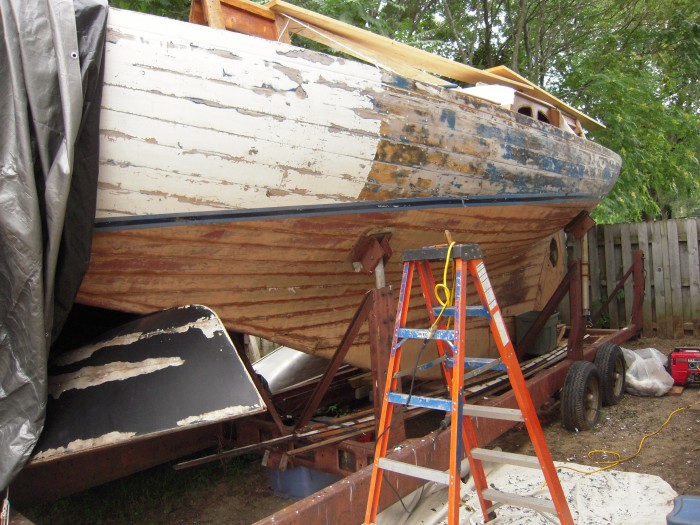
The starboard topsides proved to be a bit more of a challenge than the port-sides.  It seems a good deal of Reverie’s life was spent taking the hard knocks on the starboard side.  There, I found replaced planks (More on that later…  Much more).  There were areas that had been faired with what appeared to be an epoxy-based filler.  Oh yes, someone used 5200 for caulking the plank seams. I have seen 5200 recommended, in various online forums where free advice is handed out like champagne on New Years Eve; copiously and carelessly.  Dear reader, if you are ever thinking of restoring or maintaining a wooden boat and you choose to use 5200 to caulk seams, let me tell you, Old Nick has a special task in hell for you: eternity cleaning 5200 from plank seams.  Don’t say I didn’t warn you. 5200 will be used in this project to great effect, later on down the road but not here.

I had to modify my heat gun/scraping technique and managed to get the brunt of it done by sharpening a flat scraper and using it much like a cabinet scraper.  This produced a better surface than the method I used on the port, side reducing sanding time significantly.  It took 60 hours to scrape, sand and oil the port topside compared to about 80 hours for the starboard.

IMG_20161118_095558194.jpg

Starboard Topsides scraped, sanded and oiled

IMG_20161118_095447711.jpg

Port Topsides scraped, sanded and oiled. Trailer looks spiffy with some fresh primer.

The past few days were near record highs for November with temps around 70° F.  Both sides got two coats of piping hot tung oil and turpentine.  The boat smells wonderful! Reverie looks so different without the layers of cracked, peeling paint and exposed wood.

As the air pressure began to fall and the breeze became a gale, I put a quart of primer on the trailer.  It to looks happier.  I took a 12 ton bottle jack and it all rests  on cement blocks instead of the trailer tires. After I got the trailer leveled, I got the boat leveled a bit more.   It really helped to stabilize the whole thing and get the tires off the ground.  I gave the lug nuts a good soak of penetrant and plan put the tires out of the elements for the duration of the project.  With the wheels off, the brakes will be begging for an overhaul… .

Scraping, sanding and oiling below the waterline will go much better as there won’t be scaffolding involved and the paint seems to come off easier.  We’ll see.  For now, we can move forward and I no longer have that messy job to mess up my day. Today, my aches were a little less achy.  My step, a little more peppy. There’s a little vim in my vigor.   I even had to raise the rear view mirror in the car from so much slouching.  Yes, the world was a kinder place, now that that is done.  Onward!


2 Comments

Into The Light

The new year is upon us and it’s finally starting to look like January here along the Lake Michigan shoreline.  We had an unseasonably warm December due to the El Niño-Southern Oscillation (ENSO) cycle.

   http://oceanservice.noaa.gov/facts/ninonina.html

As avid cross country skiers, we were somewhat disappointed by the lack of snow.  As boat restorers, we took advantage of the mild weather to further the cause and get as much done on Reverie as possible before Winter set in.  Fortunately, we tempered these hours of work with some Grade-A, late season sailing aboard Prudence.  

Winter weather has now arrived and we got down near the single digits Fahrenheit last night.  Lake Effect snow has been quietly dusting us and the ground is now covered in white. Last week, we put a tarp over Prudence and brought her outboard in from the cold; time to replace that old water pump impeller I’ve been putting off all season.

Whenever there’s good news and bad news to be communicated, I prefer to have the bad news delivered first.  Candy coating something before the medicine does not help the medicine go down “in the most delightful way”.    Prepare yourself.  Gird your loins.  Here it comes.

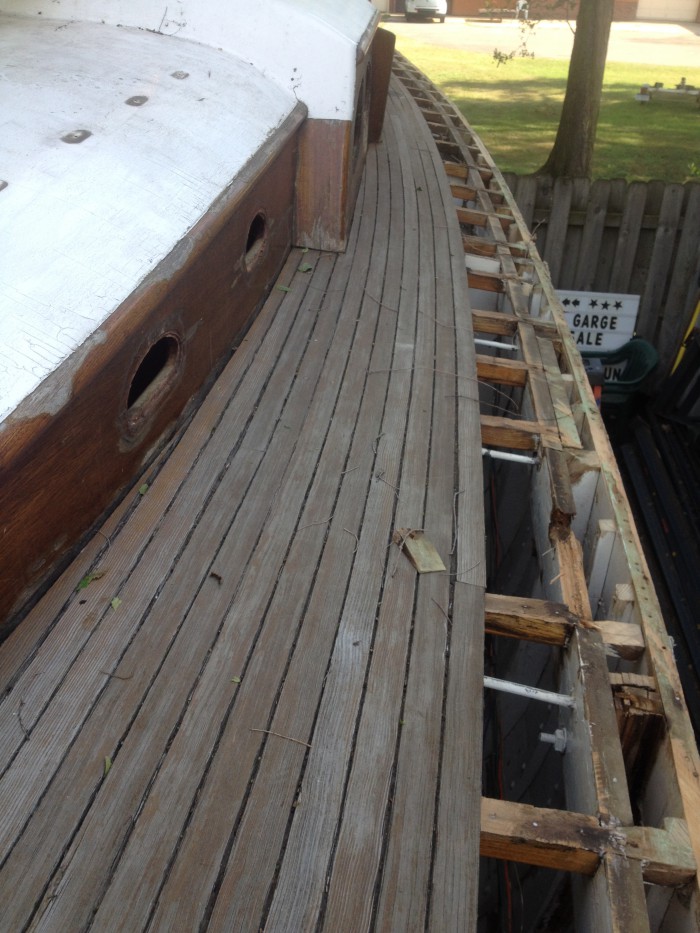
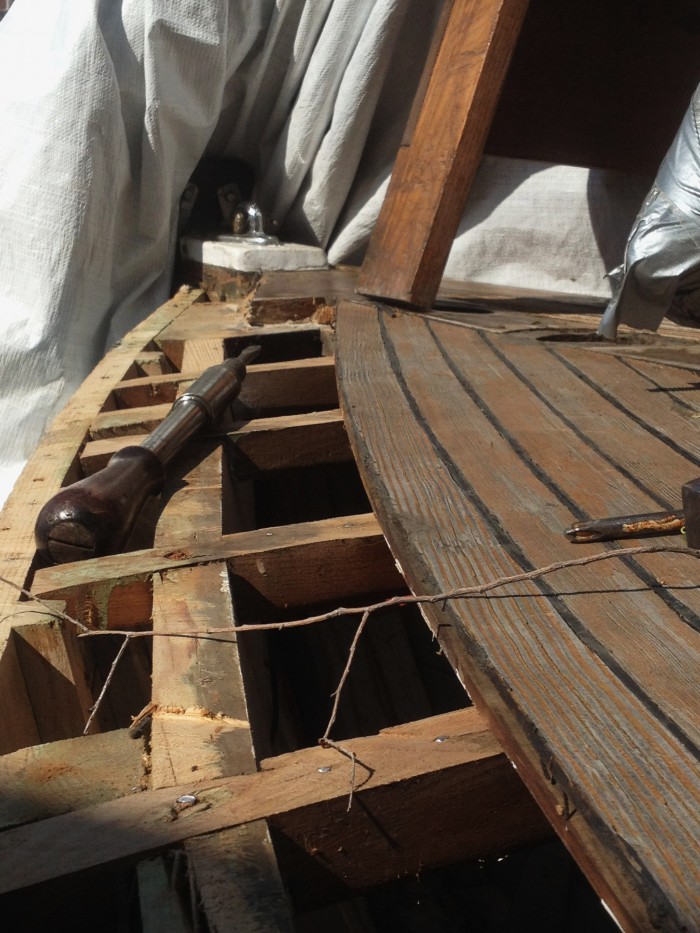
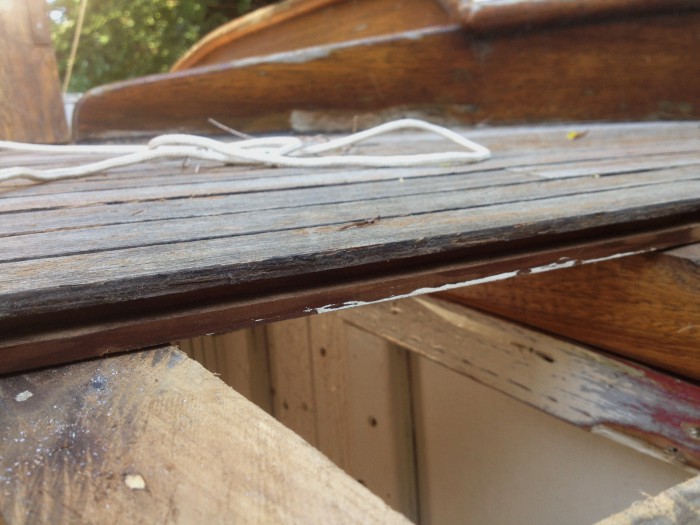
If you have been following this blog, you have ascertained we are removing the entire deck of Reverie to get at the rotted deck beams and carlines.  I have no doubt in my mind that this decision was indeed, the best tack. It will also facilitate the replacement of broken frames.  The port-side tongue and groove decking has been carefully removed, labelled and toted off to storage. It proved to be a bit of a task seeing that many of the strips are in excess of twenty feet.  The port-side deck beams are now visible, as are the  areas aft near the cockpit and transom that get little ventilation.

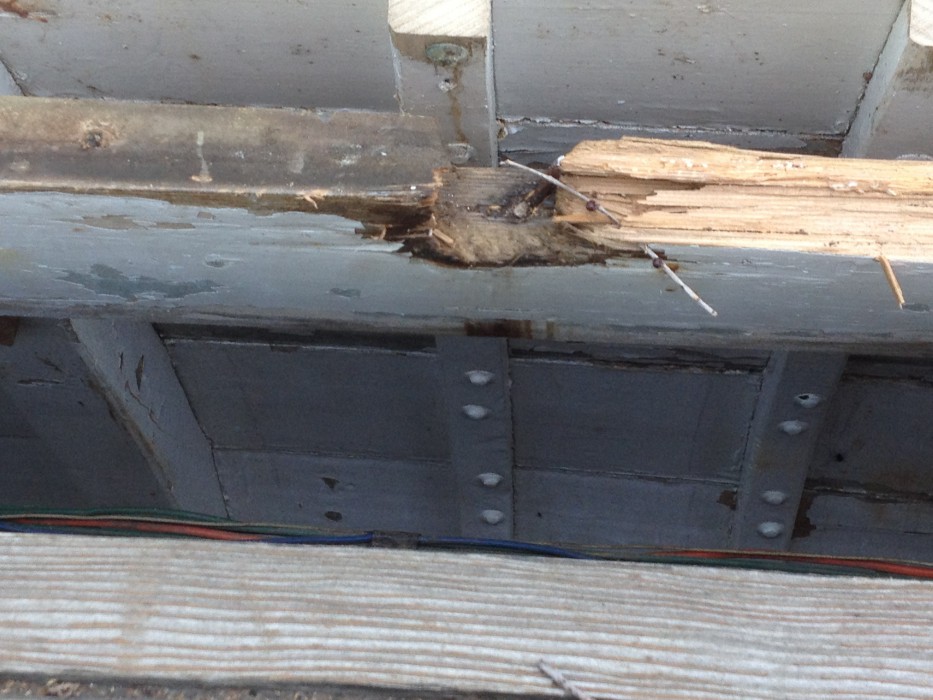
The entire port-side sheer clamp is now visible and there is evident damage amidship.  The sheer clamp is a structural  member that runs stem to stern and serves to support the deck beams and provide resistance to the torsional twisting of the hull.  It is bolted along the inside of the hull at the frames and the deck beams are half-dovetailed into it.  It appears to be made of cypress wood; a good choice considering the need for a light, strong,  rot resistant wood.   I thought of white oak as an alternative for replacement yet was convinced otherwise after researching the weight difference between the two.  Had we gone with oak, there would be another 300 lbs. added to the sheer.

IMG_2779

The port-side sheer clamp showing evident signs of rot amidship.

IMG_2782

A closeup of the rot on the port-side sheer clamp.

Once the port-side deck was removed, it became time to prep the starboard-side deck for removal.  Julia began the monotonous chore of removing all the bungs from the toe rail in order to get at the 4 inch bronze screws holding it down every 6 inches.  While she did that, I worked on the deck hardware.  I removed the starboard winch, cleats, anchor chocks, spinnaker pole chocks and, with Julia’s help, the stanchion bases.

The stanchion bases are particularly hard to get at as they are fastened between the sheer clamp and the sheer plank.  Inside the cabin, it was a tight squeeze but in the cockpit, it seemed nigh impossible.  I had to lie on my back and reach through one of the cuddy holes in the cockpit with my arm fully extended all the while attempting to reach the nut I couldn’t see with a deep socket  and extension.  This maneuver was what I imagine it would be like wearing a blindfold while trying to steal a bag of chips from the top row of a vending machine by reaching up through the discharge bin.  While I attempted this feat of derring-do, Julia waited  patiently on the ladder ready to unscrew the fastener once I found the nut.

Lying on my back, in this twisted state, up became down and down became up.  I fished around here and there but could not find the nut to the stanchion base.  I rolled the socket wrench into the small of my hand hoping for some tactile reassurance that this wasn’t all a bad, painful dream and that I would eventually find the nut and bolt that were obviously eluding me.  I extended my forefinger here and there and suddenly, it felt as if I had stuck it clean through some wood!  “…all part of this bad dream”, I thought.  “Just relax.  Embrace the pain.  Find the bolt.”

My eyes were closed.  They were useless in this endeavor. All sensory input was being conveyed through an arm bent into positions it was never meant to be in yet, there it was: the sensation that I had my finger stuck clean through a piece of wood. I wriggled my forefinger around.   It was as if it was stuck through a hole in a sock; a 5/4 inch thick rotted sock.  I felt air on the other side.  Was my finger sticking through the sheer plank and the world outside?  “No”, Julia assured me.  “I can’t see your finger.”  Then, the truth set in.  I had stuck my finger through the rotten starboard-side sheer clamp!

I writhed about like a crocodile being swallowed by a python,  still unable to find the damn bolts. I began to see a shining light through my closed eyes.  I heard a voice beckoning me.  “Come to the light!”   I reached out, with my contorted arm, and touched the stanchion bolt I so desperately sought.  I focused, careful not to let this moment slip away.  I got the socket on the nut.  Julia unscrewed it from above.

Bolt number two was right next to a frame but now that my arm was a bent pipe cleaner, I got the socket onto it, as well.  The two other bolts to the stanchion base were screwed through the deck and into the sheer clamp.  The cause of the rot, perhaps?  They pulled out without even needing to be unscrewed.  The stanchion base was finally liberated from the covering board.  It then took several minutes to extract my now serpentine arm from the labyrinth while I relived the pain of a long-ago separated shoulder.  Why did I ever think rollerblading was a good idea?

The outcome of these travails are the issues with the starboard-side sheer clamp that will be come into focus as work progresses.  It was  reminder that there is more than meets the eye in our little project.  We’re certainly not out of the woods with these hidden issues.  “… two steps back.”  I’m glad we found this out before Winter set in.   It gives us time to plot out the next course of action. These sheer clamps must be addressed before the deck beam work can start.   I guess that big slab of white oak we have will have to wait a bit before it’s sawn into deck beams.  Time to start shopping for some nice cypress.

Now that we’ve had our medicine, I must say that it has been a delightful season.  El Niño might be wreaking havoc all over the world but he allowed us to get out on our Com-Pac 16, Prudence for some extra-fine Fall/Winter sailing.  One of the real highlights of the season was sailing on Christmas Day.  There had been a raging gale several days before Christmas with 22 foot waves on Lake Michigan.  That’s 22 foot December, Great Lakes waves which are steeper and heavier than ocean waves. While not 22 feet, there were still some big rollers that picked up in the 20 knot afternoon breeze. The waves were very uniform with an occasional series standing above the others.  It was consistent and certainly memorable.

The icy, steel blue water was beautiful and deadly as we beat  5 miles WNW onto the lake.  We were driving so hard, we kept the Port Sheldon pier off our stern with almost no leeway to the South.  Prudence yields a bit to the currents so this was a pleasant surprise.  We would be able to triangulate back to the pier.  Three legs and we’d be home.   We ended up gybing off on the second leg then rounding back NE as Prudence didn’t want to tack into the rollers that were beginning to stand up 5 miles offshore.  On leg three, we ran S along the Lake Michigan shoreline back to Port Sheldon. That leg ended way too soon.

DSCN1304

October on Lake Michigan

DSCN1405

November sailing- Holland, Michigan

DSCN1419

November sailing. Coming into Lake Macatwa from Lake Michigan.

DSCN1453

Christmas Day 2015. 5 miles out, 5 miles back with Julia’s daughter, Chloe. Fine sailing. -Port Sheldon, Michigan

Christmas Day - Lake Michigan

Christmas Day – Lake Michigan

It has, indeed, been a delightful year filled with hard work and dedication that shows in all we have accomplished  It has been a year of change and sacrifice balanced with the enjoyment of life’s small pleasures.  It helps to have someone like Julia who can see the forest through the trees.  She has been working tirelessly alongside me.  Even during the 60 hours it took me to strip the paint from the port topsides,  she was there at the end of the day with a couple of cold beers that we would drink at the Sunset Lounge, our two lawn chairs in the shade of Reverie.  Here’s to everyone having an eventful and  productive 2016.  Cheers!


4 Comments

Tung Oil and Turpentine

We are well into November and the weather has been good to Reverie’s restoration project.  The leaves were late to turn this year due to a warm Fall but they have now fallen  rapidly and carpet the earth in all shades of red, yellow and brown.  Still, the mild weather persists.   The birds aren’t quite so convinced of an eternal Autumn.  They know what’s about to happen and are acting accordingly.  We saw our first dark eyed junco the other day while working on Reverie; a sure sign of the change in seasons.  The shoreline of the Great Lakes is, well, a great place to watch migrating birds.  We were even  lucky enough to see 4 endangered whooping cranes the other day on a back road drive from Holland to Grand Rapids. Their size is impressive.

On a somber note, today is the 40th anniversary of the sinking of the Great Lakes freighter, Edmund Fitzgerald. It vanished without a trace in a massive storm on Lake Superior and has since been found lying at the bottom of the lake broken in half by the mighty waves.  http://www.shipwreckmuseum.com/the-fateful-journey-62/

102 years ago, the Great Lakes Storm of 1913 sank 19 ships with over 250 lives  lost on the open waters of these inland seas.  http://www.nws.noaa.gov/com/weatherreadynation/news/131107_white.html#.VkH8LdKrTwc

Today, is nothing like those days.  It is calm and mild and I’m going off to work on Reverie for a while thankful for this weather as I solemnly recall those who lost their lives on the Great Lakes.

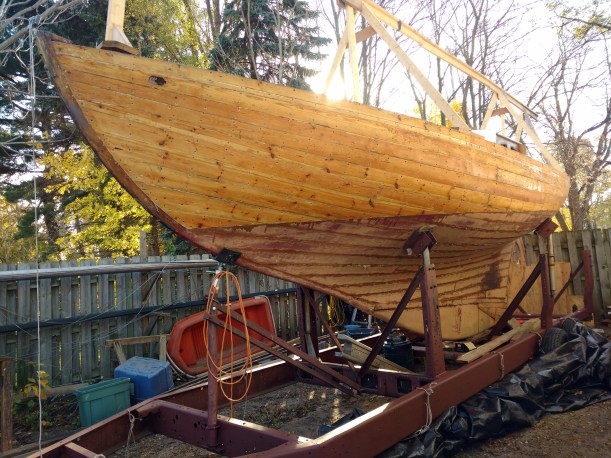
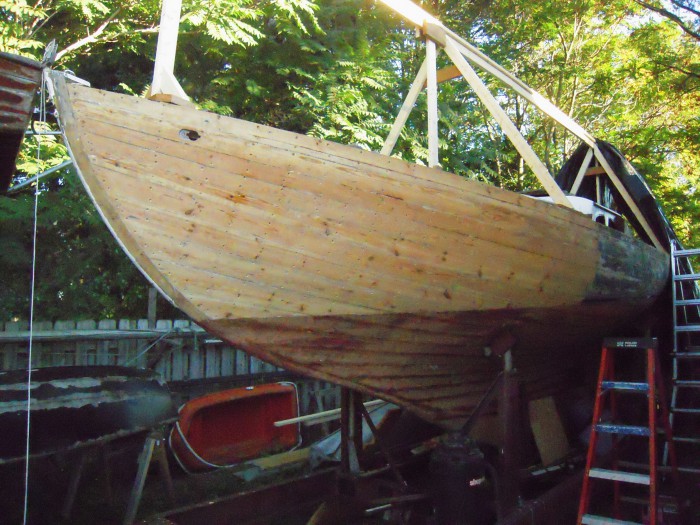
Yesterday, we passed a waypoint in the restoration project.  After 60 hours of scraping, sanding, and the cleaning of every single fastener hole on the port topside, I was able to apply a coat of tung oil and turpentine!  This was a process that took a lot longer than expected but we are pleased with the results.  The mixture, consisting of 50% tung oil and 50% turpentine, was heated to near boiling to facilitate its penetration into the thirsty yellow pine planking.  I could see it immediately expanding some of the surface cracks that had begun in the parts of the topside that had been without paint for an undetermined amount of time.  I worked this delightful smelling mixture into all the exposed fastener holes with a 3 inch chip brush.  You could see the hot oil and turpentine being sucked into the holes. It made all the time consuming work worth it.  There are certainly faster ways to strip the hull down and sand it but I would rather spend 2 or 3 or 4 times the amount of time to get it the way I wanted it and err on the side of safety.

The frames, which are basically the ribs of the skeleton, are laid out in a pattern of one very heavy white oak frame fastened with heavy galvanized nails and then two smaller frames fastened with copper rivets.   These smaller oak frames are steam bent and still fastened tight.   We will most likely add bronze screws to the heavy frames but that’s going to require some investigation of the existing nails.  For now, I’m guessing they have run their course in usefulness.  When white oak and steel get together, oak wins.  I removed the flat-head steel screws to the engine exhaust flange that was backed up with an oak block and there was barely any thread left.  The use of quality, hot dipped galvanized fasteners is a money saver and they served well for over 60 years but we’re going with silicon bronze.  The oil filling the fastener holes is a good thing.  It  expands the wood and seals it from the oxygen needed to create rot.

 The whole port topside consumed a little less than a half gallon of the tung oil/turpentine mixture.  The tung oil is 100% pure tung oil and costs about $70 dollars a gallon.  Tung oil cannot be allowed access to oxygen as this begins the curing process.  I poured off half the gallon of pure tung oil into a half gallon cider jug leaving no room for air and will save it for a later date.  That will keep for quite some time, as is.  I expected to use more of the 50/50 mixture but was happy to have used less, seeing we’re approaching $100 a gallon for this elixir, once the cost of the turpentine is factored in.  “Prepare for the worst, hope for the best.”  Last night, I had to scramble around for another half gallon container to put the rest of the 50/50 mixture in and came up with an empty half gallon bottle of Scotch in our recycling bin(now how did that happen?).   It was almost spot on one half gallon with a glass vitamin bottle to spare. Now I have to find some wood that needs treating today so as not to waste those precious fluids in the vitamin bottle.  That shouldn’t be difficult.   So, dear reader, I must be off and begin the next phase of the project which is to do the same thing to the forlorn  starboard side that now looks even more desperate compared to the freshly oiled port-side.  I will leave you with some pics of the progress.

Best Regards,

Roger

60 hours of scraping, sanding and oiling. Done!

60 hours of scraping, sanding and oiling. Done!

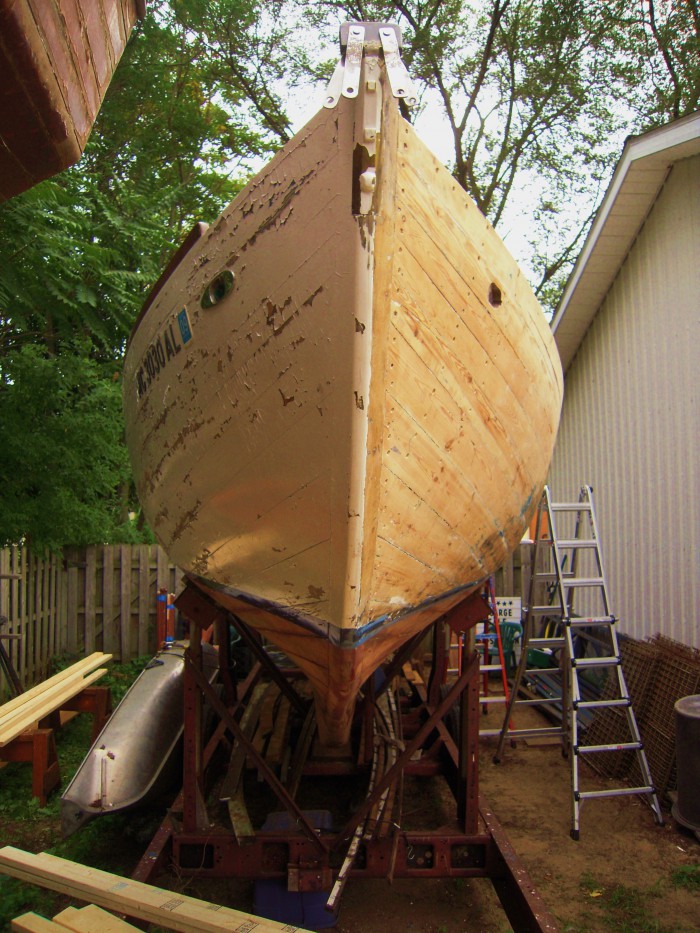
Reverie's lovely overhang. The one small plank is a former repair made of dissimilar wood and will most likely be replaced.

Reverie’s lovely overhang. The one small plank is a former repair made of dissimilar wood and will most likely be replaced.

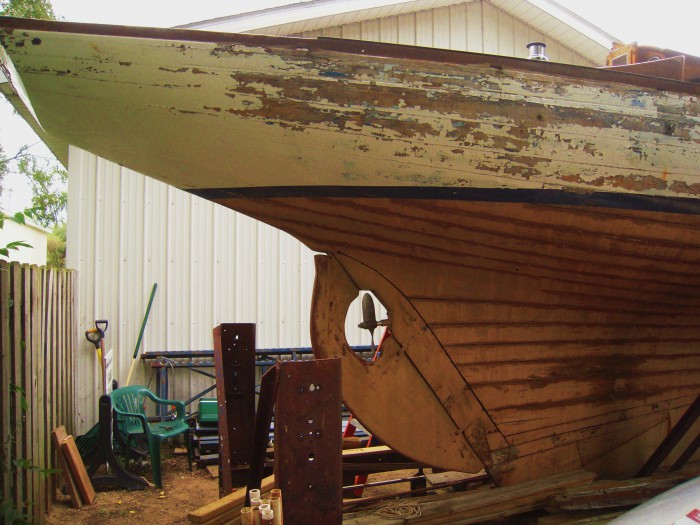
Starboard topside looking forlorn and in need of help.

Starboard topside looking forlorn and in need of help.

Yikes!

Yikes!


2 Comments

Time Is of the Essence


October is upon us and the race against the elements rages on.  My fit of optimism that predicted the scraping, sanding and oiling of the topsides was, of course just that: optimism.  In my dream world, it was going to take 20-25 hours per side to finish this project.  Now, my optimistic estimate is for each side to be completed in 50 hours per side.  Yes, it’s boat work and that’s how it goes.  The real time consumer has been cleaning out all the fastener holes.  They are filled with hardened putty and require a bit of concentrated heat to soften up then carefully dig out.   I want to get each one as clean as possible to facilitate the penetration of the 50/50 mixture of 100% pure tung oil and turpentine.  Any place there is exposed end grain needs to be soaked in this formula.  This mixture gets heated to near boiling and soaks into the wood quite well.

There are many hundreds of fastener holes and, depending on each ones depth, take a minute or so apiece to clean. The strength of a wooden boat lies in redundancy.  Many small fasteners and components are put together to effect the strength required to withstand the stresses incurred in a seaway.  The stress gets distributed across the greatest area possible and, voila,  you have a sturdy wooden boat.  You also have hundreds of fasteners that demand attention.  It only takes the failure of a few in a series to set off a chain reaction that could lead to catastrophe.

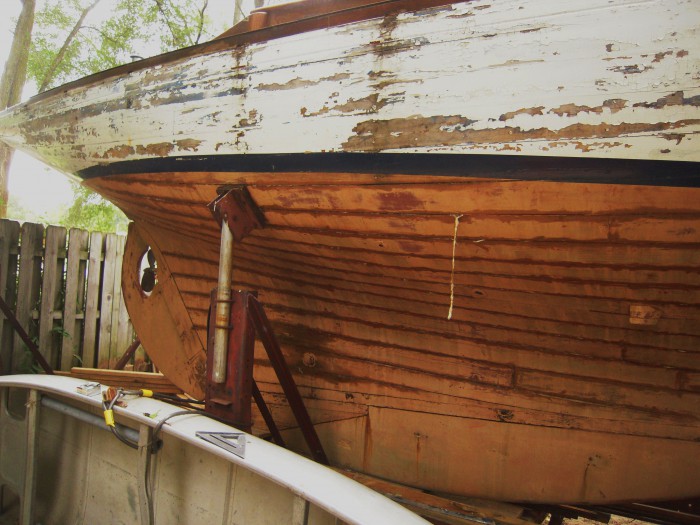
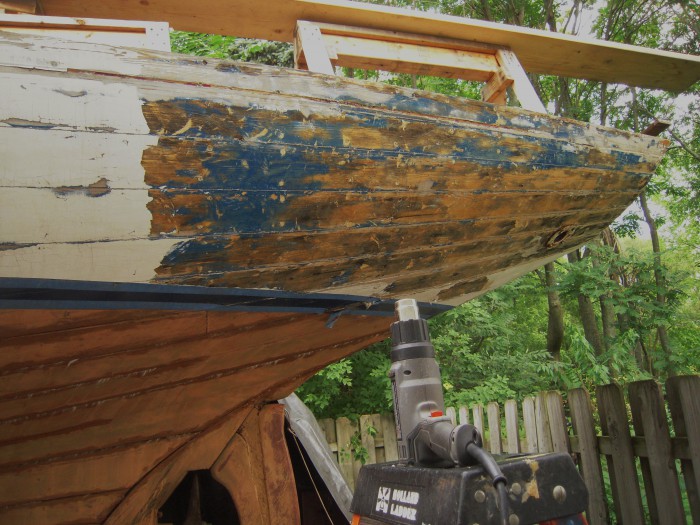
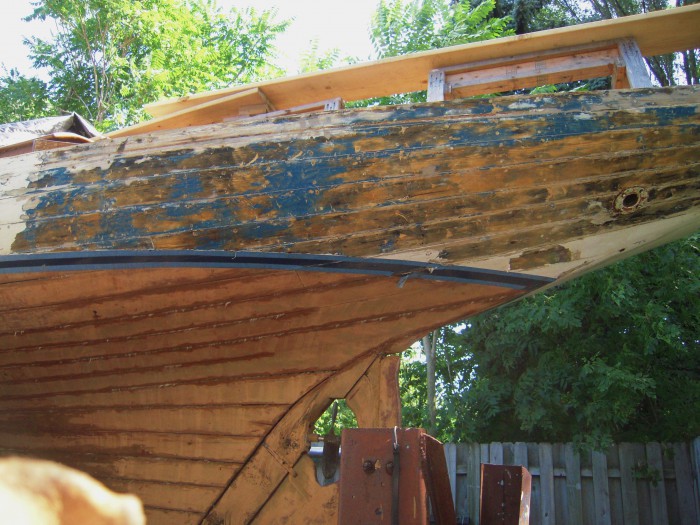
During this phase of paint scraping, I also had to determine the best way to preserve the waterline.  The waterline was already there so, to lose it then have to set up the procedure to draw a new waterline seemed to be the kind of redundancy we should like to avoid. Preserving the existing waterline is one of the reasons I chose to do the topsides first and address the hull below the waterline as a separate project; that, and the fact that the bottom paint has no bare spots and, therefore, is still protecting the wood.  It’s those bare spots on the topsides that initiated this phase of the restoration.

The waterline runs from the bow in a 3 inch strip and expands to 4 inches over the last few feet near the stern.  Easy enough.  I can mark where that begins and add that taper.  I was going to tape along the bottom of the waterline and work from that but the blue painters tape that was already there wasn’t holding up to the heat gun.  I chose to sharpen the scraper to a knife edge and work along the boot top (waterline)/bottom seam in an upward fashion so as to preserve the waterline.   You can see in the photo, where I have the waterline removed, that it worked well and there will be an accurate line to follow when it’s time to paint the new waterline.

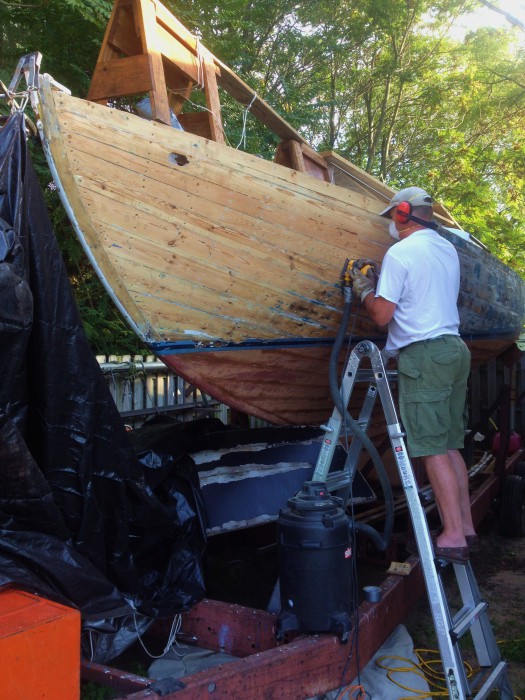
As the sanding progresses, the hull is revealing itself in a very positive way.  It is nice to see the yellow pine exposed for the first time in over 60 years looking as if it had just been fastened.  It has withstood the test of time admirably and is a testament to it’s efficacy as a planking material.  I have a shop vac rigged up to the discharge of the sander and it is working quite well at keeping the dust down.  With this system, it is virtually dust free.  I’m still wearing a dust mask and ear protection but it is much more comfortable than the dreaded respirator.

We took a break from the topside project to begin construction of a better tarp frame.    With Winter coming on, the frame needed a steep pitch to deflect the incessant lake effect snows that dump on the shoreline of Lake Michigan. The frame will be reinforced with more rafters as the season progresses but, for now,  it’s enough to withstand the wind and rain. We had a makeshift setup last Winter and had quite a time getting the snow and ice dams off the deck.  This new structure will also serve as a beam to lift the cabin off the boat.  Julia is working on getting all the fasteners out of the cabin and cockpit (a whole lot of work in one small sentence).   Then, we will lift the cabin top off with a block & tackle and get it off the deck in order to have better access to the deck beam and carline repairs.  It will also make it easier to strip the inside of the coach roof and cabin sides as it can then be flipped upside down rather than us being showered by scraped varnish.

There is a bit of momentum and the only unknown factor is the weather.  If it all doesn’t get done before the snow flies, that’s the way it goes.  In the mean time, onward we plunge; led by an optimism that suggests a certain naivety while providing impetus to move along with this tedious, dirty job of stripping, sanding and oiling the topsides.

DSCN1228DSCN1229IMG_3002DSCN1232DSCN1227DSCN1224DSCN1223DSCN1222DSCN1220


Leave a comment

The Elephant in the Room

As the last week of August fades to memory, it’s time to reflect on what’s been done and plan for the cooler months ahead.  For many people, summer ends at Labor Day; the tug of the academic calendar is just too much for folks raised to abide by the “back to school” mentality.  They may not be in school or have children in school but the hand is writing on the wall.  We are bombarded by yet another consumer milestone.  “Buy, buy, buy”, the ads say.  When I’m out shopping, I feel like maybe I should pick up a fresh pack of crayons or maybe some paste.

Here in West Michigan, we see the last of the tourists “recreating profusely”; they’re squeezing that last bit of juice from the lemon before it’s time to get the kids off to school.  Then, it’s a little easier to breathe around here.  We don’t have to fight the crowds to get around and no longer have to plan our sailing time during the week.  It was so hot and humid for the first part of August, there was not much going on in the way of boat work.  I’m not partial to heat indexes in the lower 100’s and the fact that I’m using a heat gun only reinforces my prejudices.

Late July and some of August saw us dutifully removing the rest of the covering board and begin the process of removing the deck from Reverie.

IMG_2747IMG_2771IMG_2761

That went as well as it could and we are now able to see the extent of the rot to the port-side deck beams.  There weren’t really many surprises as I was expecting to find more rot than was visible from the interior.  After all, that is one of the main reasons we are completely removing the deck.   We got 3 rows of the tongue and groove decking off yet, something wasn’t quite right.  There was an elephant in the room and it wasn’t going away.

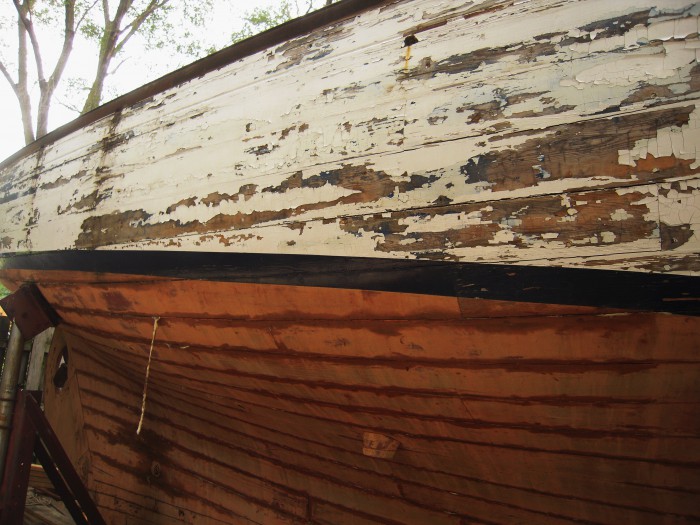
The warm weather did slow us down but it was the impending cold weather that made the elephant more apparent.  While focusing on the deck and executing the plan to remove it, time was ticking away.  After seeing what would need to be done with the deck beams, the seemingly innocuous topsides began to call out for help.  The paint was crazed and peeling.  There were bare spots from an attempt, made by the previous owner, to sand them.  I’m not sure how long ago the attempted sanding took place but the sections of exposed bare wood was showing signs of weathering that could lead to wholesale splitting of the lovely,  longleaf yellow pine that planks our fair vessel.  It was time to feed the elephant.

Completely stripping the multiple layers of topside paint was the only course of action seeing how the paint had split and cracked where it hadn’t already been sanded.  Reverie has been out of the water for years and the planking is a lot drier than a wooden boat’s should be.  Dry planks can stress the fasteners and shrink the dimensions enough to cause problems when it comes time to recaulk the seams.  If the seams are caulked when it’s dry, the expansion can cause undue stress and actually cause the fasteners to pull out.  Not good.

It’s going to take about 30 hours per side to strip the paint and a good 20 to do the sanding and oiling.  After the oil dries, the initial coat of primer goes on and Reverie will be much happier.  So, Julia gets about 100 hours of work time off while I    take one for the team since there’s no reason we should both be exposed to this mess.  She hasn’t stopped work altogether; she’s working on removing the multitude of bungs (wooden plugs that cover screw holes) from the cockpit coaming when I’m not making too much of a mess.

Wearing a respirator for 80 hours is not something I’m enjoying but it has to be done. I have the heat gun set just hot enough to lift the paint but not hot enough to burn it.  I’ve done some research on the release of lead and other toxic substances and am working at a lower temperature to avoid as much exposure to lead as I can.  I watched a video on youtube of this guy using a heat shrink gun and literally burning the paint off the topsides.  He said he can get a whole boat stripped in one day.  He wasn’t wearing a respirator.  I think I’ll err on the side of caution.

See you when it’s done.

DSCN1044IMG_2796006DSCN1138


2 Comments

Wooden Blocks

March has arrived and the time change to Daylight Savings takes place in the early hours of Sunday morning.  Losing an hour of sleep shouldn’t be much of a problem seeing as I get up well before dawn anyway.  We have passed meteorologic Spring already and the  month brings with it the sense that I need to finish up with this Winter’s off-site projects.

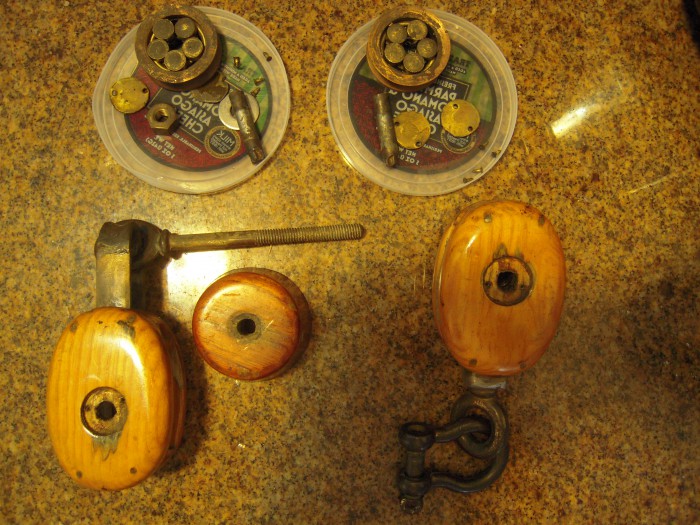
The blocks on Reverie were in desperate need of TLC. The varnish on all of them was chipped and worn with the sheet blocks showing the worst of it.  They had been left on the boat for who knows how long, and had deep splits in the wooden cheeks with black water stains that looked permanent.


DSCN0304

Blocks, their sheaves, bronze roller bearings and cheek plates.


DSCN0046

Some of the blocks as we found them. The lorn sheet blocks are on right.

DSCN0305

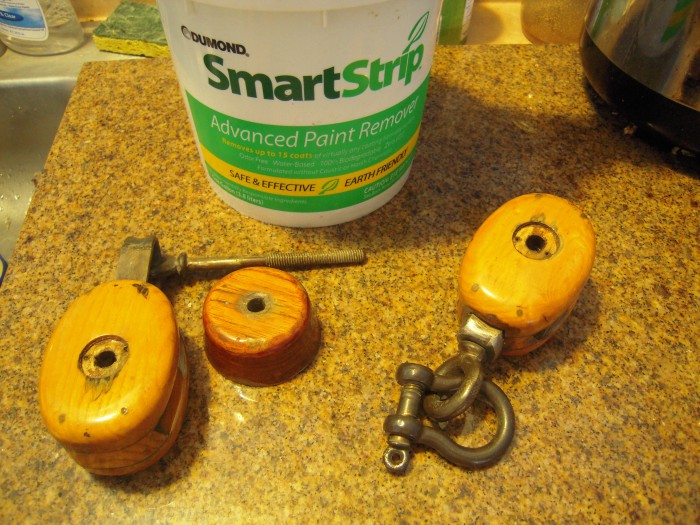
Smart Strip does the job.

The first course of action was to disassemble everything and strip the cheeks down to bare wood so they could go into a hot bath of linseed oil, beeswax and turpentine.  I discovered SmartStrip when I was working on Persistence and needed to strip paint from fiberglass.  It is expensive, costing close to $60.00 a gallon but it is environmentally friendly and does the job.  It’s biodegradeable and has very little odor. We have had good results covering whatever needs to be stripped with plastic bags or plastic food wrap and leaving it on overnight.  It will be the stripper of choice for the rest of Reverie’s projects along with a heat gun for the hull and other easily accessible areas.


DSCN0578

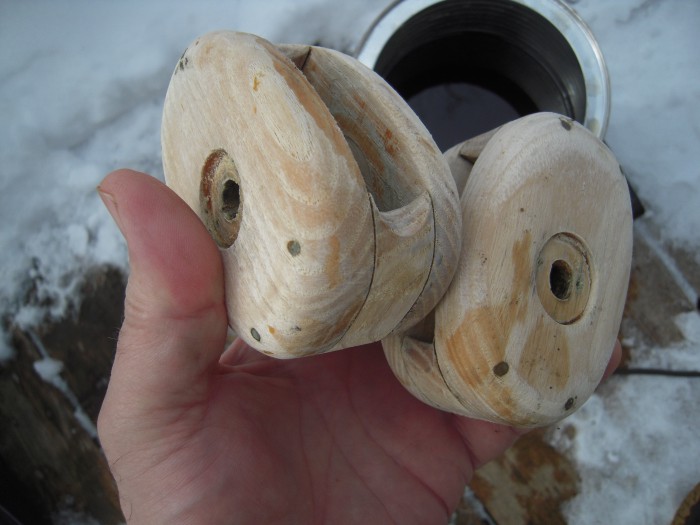
A couple of block cheeks stripped and ready to go into the hot linseed oil mixture.

I applied the SmartStrip to  the wooden cheeks and let them sit overnight in plastic grocery bags. The next morning, I scraped off the varnish with a plastic putty knife and an old toothbrush.  I brushed household bleach on the black spots repeating this procedure until the spots were all but gone.  I then scrubbed them under running water so as to remove all traces of paint stripper and bleach.  Before they went into the oil mixture, I let them air dry for several days.

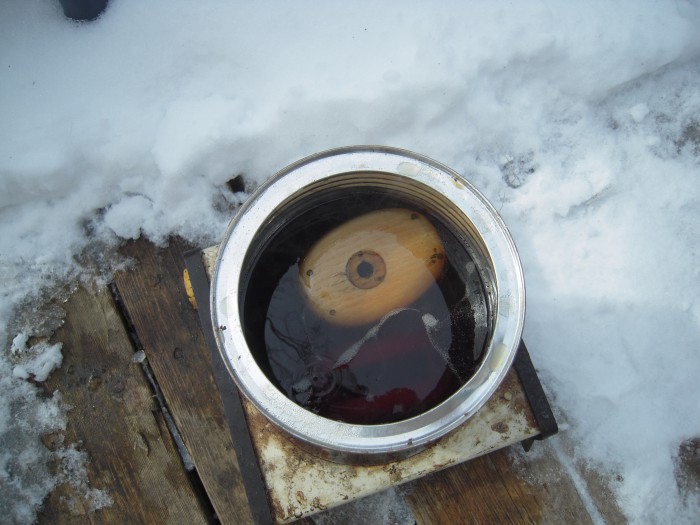
Getting the mixture of linseed oil, beeswax and turpentine at the right temperature takes careful monitoring of the hot plate.  I like to have it as hot as possible without smoking and potentially catching on fire.

DSCN0579

Well used hot plate and coffee can full of linseed oil, beeswax and turpentine.

I cooked each block for about 4 hours until I could see no more air bubbles coming out of the wood.  I then let them sit for a while on a piece of cardboard and really didn’t have to wipe any excess off except where they touched the cardboard.  I use boiled linseed oil, a bit of beeswax and  turpentine to help the mixture penetrate deep into the wood.  Boiled linseed oil dries faster than raw linseed oil but still, these cheeks are going to hang for a few months before I lightly sand them and finish them with spar varnish. The splits in the sheet block cheeks completely closed up after their soaking and one has to look hard to see them.  They’ll be fine.

So, that’s one more project off the list and a million more to go.  Regardless, it feels good to know it’s done and I don’t have to think about it any more.  That calls for a wee dram of Scotch!

Cheers,

Roger